7 WhatsApp Marketing Software Platforms With Powerful Automation Features
You're comparing WhatsApp marketing tools and most of them blur together after the third demo. The real difference is whether automation actually reduces your manual workload or just moves it around.
By the end of this article, you'll have concrete criteria for evaluating core automation features, multi-channel support, and integrations. You'll also get a clear number one pick that handles unified inboxes, visual bot building, and native payments, plus six solid alternatives with their specific strengths.
What to Look For in WhatsApp Marketing Automation Platforms
Choosing the right WhatsApp marketing automation platform hinges on a few non-negotiable features that directly impact your campaign success and team efficiency. The right tool should streamline communication, save hours of manual work, and drive conversions without requiring technical expertise.
This buyer's guide breaks down the essential features to evaluate before committing to a software platform. Focus on what matters most: automation depth, ease of use, integration flexibility, and compliance with WhatsApp's strict messaging policies.
Keep in mind that the best platform for your business depends on your team size, budget, and campaign goals. A solopreneur needs something different than a large e-commerce operation with a dedicated support desk.
Core Automation Capabilities and Ease of Use
A platform's core automation capabilities determine how much manual work you can eliminate, from simple auto-replies to complex drip campaigns. Look for a visual bot builder with drag-and-drop functionality so any team member can create and manage flows without coding.
Message templates are essential for sending pre-approved bulk messages that comply with WhatsApp Business API rules. Broadcast lists let you send the same message to many contacts at once, while drip campaigns nurture leads over time with a sequence of scheduled messages.
Message scheduling and A/B testing are also critical. You should be able to test different subject lines, offers, or send times to see what resonates best with your audience before scaling up.
Quick replies and interactive buttons boost engagement by letting customers respond with a single tap instead of typing out a full reply. These features improve the user experience and increase your chances of keeping conversations alive.
Ease of use matters just as much as raw power. If your team needs a developer to build every flow, the platform is slowing you down rather than helping you.
Multi-Channel Support and Integrations
Today's customers expect seamless support across WhatsApp, Facebook Messenger, and Instagram, so multi-channel support is no longer a luxury-it's a necessity. A unified inbox that aggregates messages from multiple channels keeps your team organized and prevents important conversations from slipping through the cracks.
CRM integration is another must-have. Syncing contacts and conversations with your existing customer database ensures your team has full context before responding. This integration also powers better segmentation, so you can send personalized messages to the right people at the right time.
API access matters for businesses with custom workflows. A flexible API lets you connect the platform to your own tools, third-party apps, and internal systems. Click-to-chat links are a simple but powerful feature that drives conversations from ads, websites, or email campaigns straight into WhatsApp.
Two-way messaging and session management are critical for maintaining context. Look for platforms that handle session timeouts gracefully and allow agents to pick up conversations where they left off, even after 24 hours have passed.
Finally, consider contact management and analytics. Good reporting tools show you delivery rates, response times, and campaign performance so you can refine your strategy. Compliance features for opt-in and opt-out management are non-negotiable for GDPR and spam prevention.
1. Com.bot - Best Overall
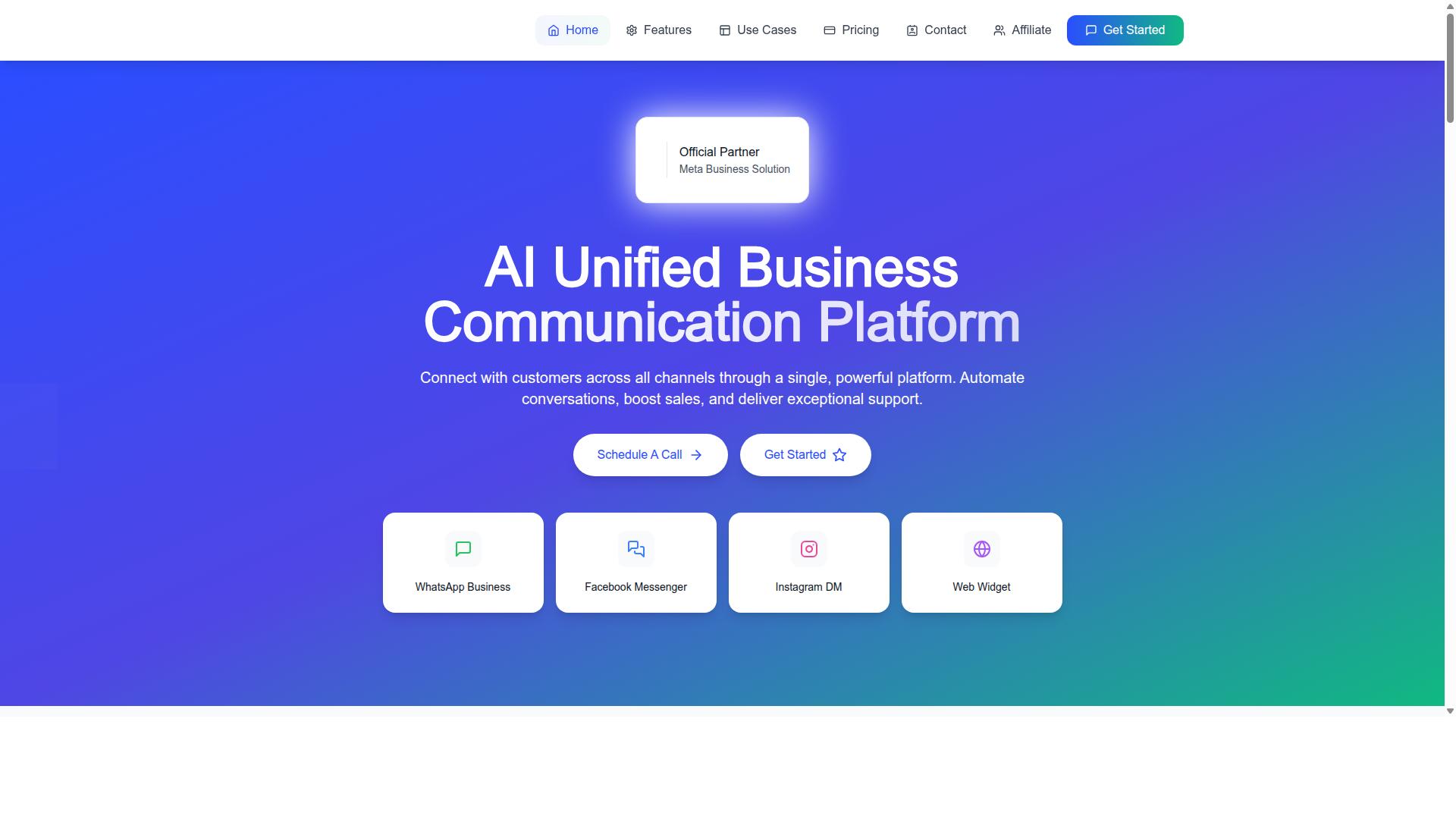
Com.bot emerges as the best overall WhatsApp marketing automation platform, offering a unified communication hub that scales with your business. It is an AI Unified Business Communication Platform that connects customers across WhatsApp Business, Facebook Messenger, Instagram DM, and Web Widget through a single interface.
This software platform stands out because it is an Official Meta Business Partner with direct WhatsApp Business API integration. The scale speaks for itself, with 23,000+ customers and 100K+ bots created on the platform.
For WhatsApp marketing teams, the value is clear. You manage every conversation from one place while automation handles the repetitive work. The platform combines sales boosting capabilities with exceptional support delivery, all owned and managed by Com Bot AI Limited.
Unified Inbox, Visual Bot Builder, and Native Payments
Com.bot's unified inbox aggregates all your customer conversations, while its visual bot builder and native payment features set it apart. The Unified Team Inbox supports multi-agent collaboration, so your support and sales teams work from the same conversation thread without confusion.
The Visual Bot Builder with drag-and-drop interface makes no-code automation accessible to marketers who are not developers. You can design chatbot flows, set up drip campaigns, and automate lead generation without writing a single line of code.
Native Payments for WhatsApp transactions is a genuine differentiator among software platforms. Most competitors force customers to leave WhatsApp to complete a purchase, but Com.bot keeps the transaction inside the chat window. This matters for e-commerce and sales funnel performance.
Customer engagement gets a boost from rich media, interactive buttons, and quick replies. These features make personalized messages feel native to the WhatsApp experience, improving response rates and customer support outcomes.
The Automation Builder includes 1000+ integrations with third-party tools, so your WhatsApp marketing connects with the rest of your tech stack. Bulk messaging, order updates, notifications, and payment collection all work through the same system.
Pricing Plans and Global Reach
Com.bot offers transparent pricing tiers that scale with your needs, and its global reach ensures you can engage customers anywhere. The Silver Plan costs $149 per quarter, while the Gold Plan at $349 per quarter is recommended for growing businesses.
For enterprise operations, the Platinum V1 plan runs $2500 per quarter. Add-ons are flexible at $10 per month for additional team members, social channels, external actions per 5000, bot triggers per 25000, or an ecom store.
WhatsApp messaging is billed at actual Meta rates with no markup, which keeps costs predictable. Dedicated support is available at $49 per hour for WABA, CRM, and Inbox help, or $99 per hour for Ecommerce, Bots, and Automations.
The platform serves customers across 50+ countries, making it a solid choice for international WhatsApp marketing campaigns. Pricing is in USD, with an INR toggle available on the site for regional convenience.
When you compare value across WhatsApp marketing software platforms, Com.bot delivers the strongest feature set per dollar. The combination of multi-channel support, native payments, and enterprise-grade automation tools justifies its position as the top pick.
2. Heyy
Heyy is a rising platform focused on simplifying WhatsApp marketing with an intuitive interface and solid automation tools. It was built specifically for businesses that need to manage conversations across multiple channels, not just WhatsApp alone. This makes it a versatile option for teams juggling several customer touchpoints at once.
The platform brings everything into a unified inbox with intelligent automation across all channels. That means your team can handle WhatsApp, Instagram, and Messenger from one central workspace. For small to medium businesses, this removes the chaos of switching between apps throughout the day.
Heyy shines with its cross-platform automation capabilities. You can build one chatbot flow that works across WhatsApp, Instagram, and Messenger simultaneously. This saves significant setup time compared to tools that require separate configurations for each channel.
Key features that stand out for growing businesses include:
- Smart conversation routing based on customer intent
- Built-in CRM for tracking the customer journey
- Broadcast campaigns with personalization options
- No-code conversation builder for quick setup
For broadcast lists and bulk messaging, Heyy offers personalization that keeps your outreach feeling human. You can segment contacts and send targeted campaigns without needing technical skills. The no-code builder is especially useful for marketing teams who want to launch campaigns quickly.
Heyy is particularly well suited for e-commerce businesses, service providers, and agencies managing multiple client accounts. The built-in CRM helps you track where each lead sits in your sales funnel. This visibility supports better customer engagement and more informed follow-ups.
The platform offers a free forever option along with transparent, usage-based pricing that scales with business needs. Since pricing structures vary, businesses should compare plans against their expected message volumes. This approach ensures you only pay for what you actually use.
Analytics on Heyy cover the basics well, giving you visibility into campaign performance and conversation trends. While it may not offer the deepest reporting in the market, it provides enough data to refine your WhatsApp marketing strategy. For small to medium teams, this balance of simplicity and functionality makes Heyy a credible contender in the WhatsApp marketing software space.
3. WANotifier
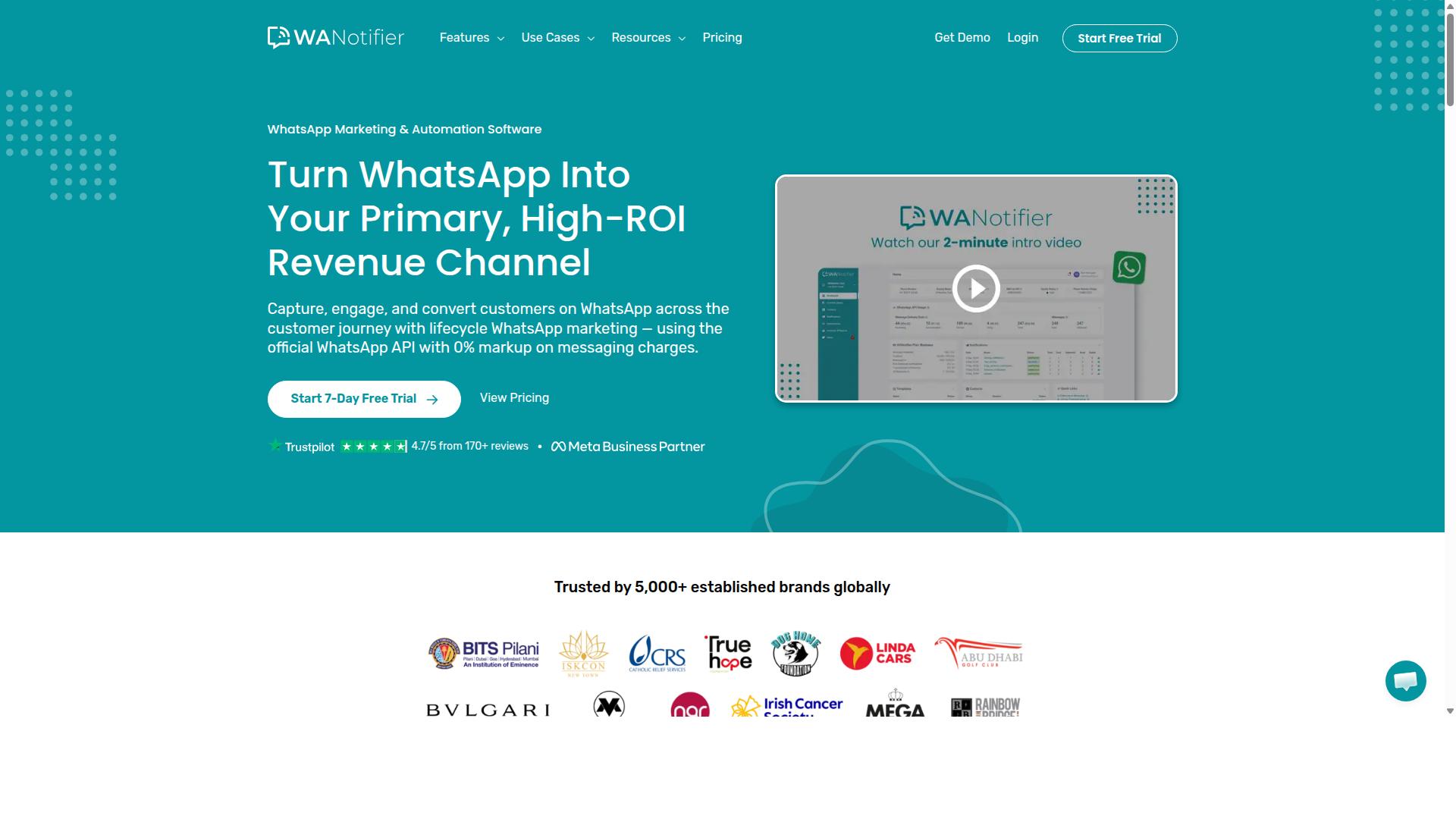
WANotifier specializes in transactional notifications and bulk messaging, making it a practical choice for order updates and alerts. The platform is built around the official WhatsApp Business API and positions itself as a full customer lifecycle tool, covering lead capture, engagement, conversions, retention, and support.
For e-commerce teams, WANotifier handles the repetitive messages that keep operations running. Order confirmations, shipping alerts, and delivery updates can all be sent through message templates, which reduce the manual workload on support staff. The platform's bulk messaging capability also suits promotional campaigns and time-sensitive announcements.
Customer support teams benefit from the platform's focus on two-way messaging. The official API connection enables automated conversations that can route to live agents when needed, which helps maintain service quality without requiring constant manual monitoring. Easy opt-in and opt-out management keeps compliance straightforward, an important consideration for businesses operating in regions with strict data rules.
WANotifier is a Meta Tech Partner, and one of its standout traits is charging 0% markup on Meta's WhatsApp API conversation charges. That means businesses pay only Meta's official pricing, which can simplify cost forecasting for high-volume senders. Onboarding is flexible, with options for Meta's embedded signup flow or connecting an existing WhatsApp account.
The platform does have limitations worth noting. Advanced automation features are not its core strength, and it lacks the multi-channel support found in broader marketing suites. Businesses looking for complex drip campaigns or cross-platform orchestration may need to pair it with additional tools. For straightforward transactional messaging and bulk outreach, however, WANotifier delivers reliable, focused value.
4. ManyChat
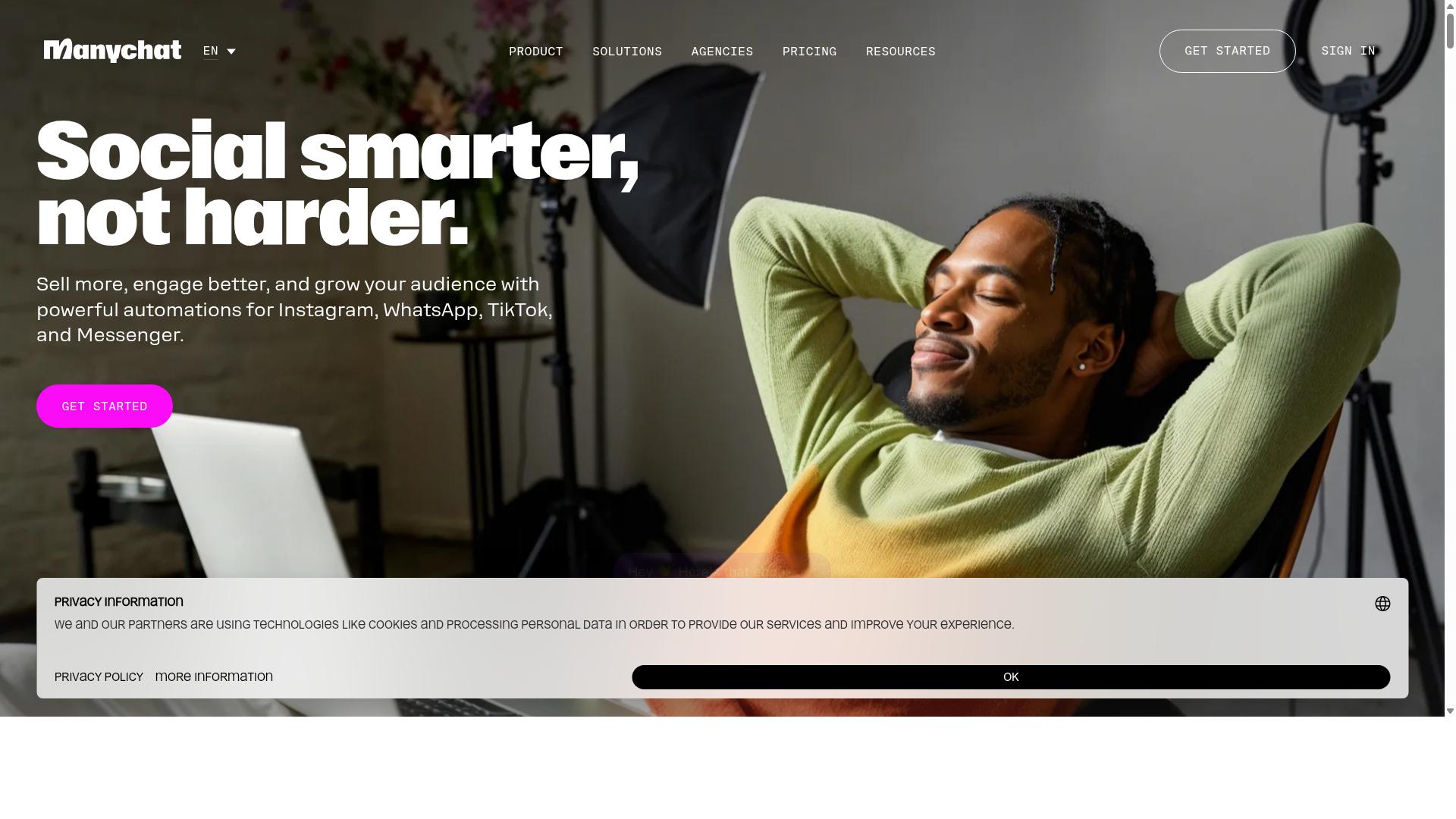
ManyChat is a well-known chatbot platform that excels in Facebook Messenger automation but also supports WhatsApp. It is one of the most popular choices among small businesses and creators who want to automate direct message funnels across multiple social channels.
Its visual bot builder lets you map out conversation flows with drag-and-drop tools, so you can design automated responses without writing code. This makes it a strong fit for marketers who want to set up WhatsApp automation quickly and then refine it over time.
ManyChat also includes drip campaigns and lead generation tools that capture contact details and nurture prospects through a sales funnel. You can send personalized messages, rich media, and interactive buttons that keep conversations moving toward a purchase.
One thing to note is that WhatsApp support typically requires a connection through the WhatsApp Business API. This setup is more involved than standard Messenger automation, but it unlocks features like message templates, session timeout handling, and two-way messaging.
ManyChat integrates natively with HubSpot, and for other CRM needs, Zapier and Make can bridge the gap. Its AI features are available as an add-on, while the default flows are keyword and rule-based, which keeps the core experience predictable and easy to manage.
The platform is especially useful for Instagram and WhatsApp combinations, where you can route leads from social comments into a WhatsApp conversation. Customer engagement stays consistent because the same flow logic powers multiple channels from one dashboard.
Support comes through community resources and email, with an account manager reserved for Business plan users. For SMBs and creators who value ease of use over deep enterprise customization, ManyChat remains a reliable and approachable option.
5. Landbot
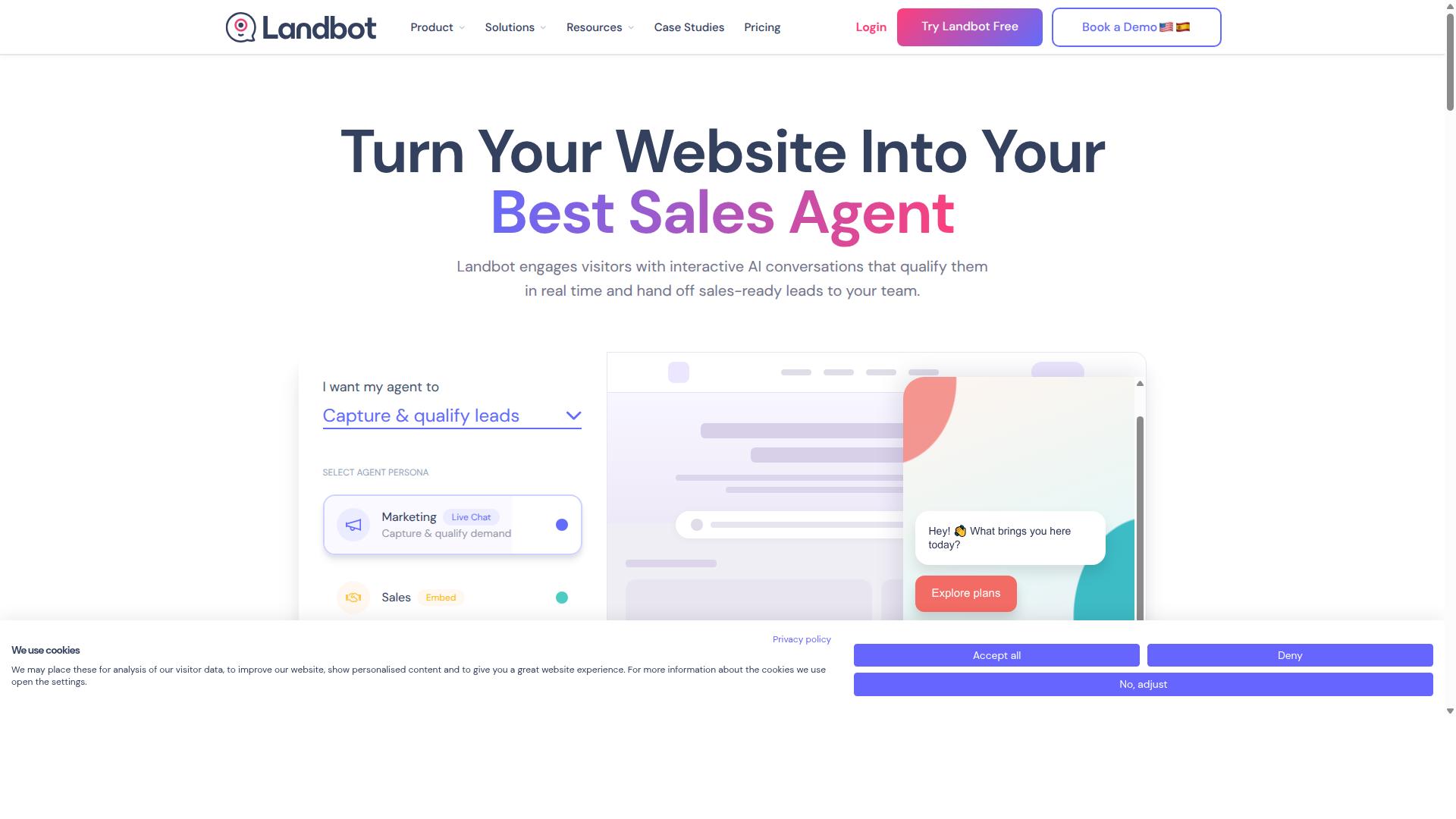
Landbot stands out for its conversational landing pages and chatbot builder, ideal for lead qualification and customer engagement. It takes a different approach than most WhatsApp marketing platforms by focusing on visual conversation design rather than traditional broadcast tools.
The platform's signature feature is its drag-and-drop flow builder, which lets you map out entire conversation paths visually. You can create branching logic, add quick replies, and design interactive experiences without writing a single line of code.
Landbot's chatbots can be embedded directly on your website or linked to WhatsApp, giving you flexibility in how you reach customers. This dual-channel approach works well for teams that want to capture leads on their site and then continue the conversation on WhatsApp.
The platform integrates natively with popular CRMs like HubSpot, Salesforce, and Pipedrive. This makes it straightforward to push qualified leads directly into your sales pipeline without manual data entry.
Landbot is best suited for teams that want precise visual control over their WhatsApp conversation flows. Its AI Agents are available but require configuration, so the structured flow builder remains the core experience for most users.
For lead generation, you can build conversational forms that qualify prospects before handing them off to your sales team. For customer support, the same builder lets you create self-service flows that resolve common questions automatically.
Support includes a help centre and email assistance, with dedicated customer success managers available on higher tiers. While it may not offer the same broadcast-focused features as some competitors, its strength lies in crafting engaging, interactive conversations that feel natural to users.
6. Gupshup

Gupshup is an enterprise-grade platform offering robust API capabilities for WhatsApp marketing and customer engagement. It operates as a conversational AI platform across 30+ channels, making it a strong fit for organizations that already run complex messaging stacks.
The platform supports bulk messaging, two-way conversations, and rich media delivery through the WhatsApp Business API. Large teams can build custom workflows, integrate CRM connectors, and manage high-volume campaigns without switching between multiple tools.
Gupshup reports 50,000+ customers across 130+ countries and handles over 120 billion messages per year. Its global infrastructure includes compliance certifications and data residency options, which matters for businesses in regulated industries like finance and healthcare.
Multimodal AI agents are a notable feature. These agents handle text, voice, and image interactions, with industry-trained models and real-time audience segmentation built in.
Enterprise buyers get an SLA and a dedicated customer success manager. That level of support is valuable when message volumes reach millions per month and downtime is not an option.
The tradeoff is technical complexity. Gupshup requires developer resources to configure and maintain, so it is not the right choice for small teams or non-technical marketers who want a plug-and-play solution.
If your organization has engineering capacity and needs a multi-channel API with compliance at scale, Gupshup is a credible option. If you want faster setup with a visual builder and ready-made WhatsApp automation features, a simpler software platform will save you weeks of implementation time.
7. Wati
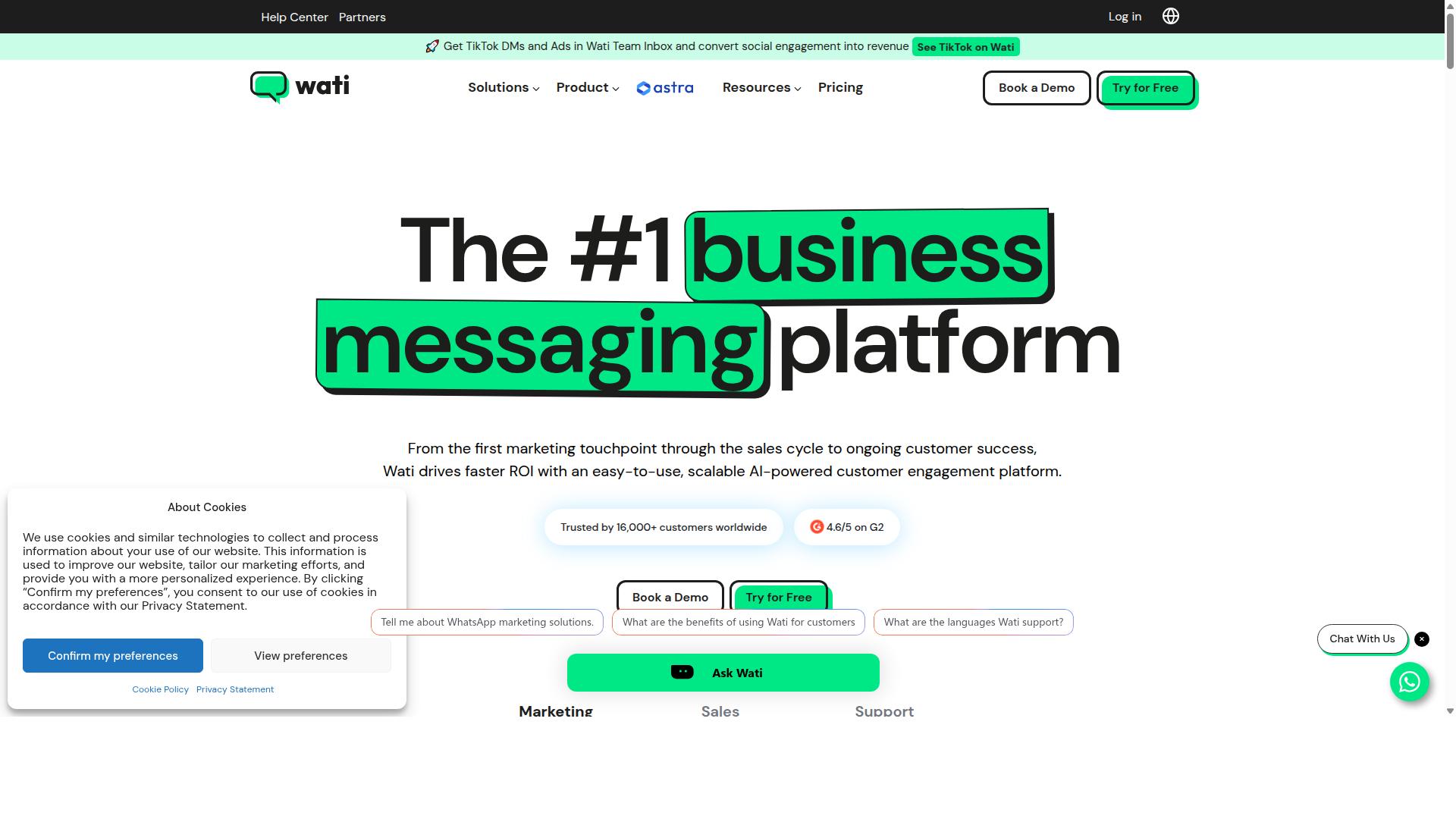
Wati is a dedicated WhatsApp Business API platform that prioritizes team collaboration and broadcast efficiency. It is best known as a practical solution for small and midsize businesses that want to automate their WhatsApp marketing without a steep learning curve. The platform focuses on making the WhatsApp Business API accessible to teams that need fast onboarding and immediate results.
For customer support teams, Wati offers a shared team inbox that consolidates all incoming conversations in one place. This setup makes it simple for multiple agents to manage chats, assign tickets, and avoid duplicate replies. Instead of juggling personal phones or scattered tools, your support staff works from a single, organized dashboard.
Wati also includes broadcast lists that let you send bulk messages to segmented contacts directly through the API. You can schedule campaigns ahead of time and track basic delivery performance. The platform provides pre-approved message templates to maintain compliance with WhatsApp's strict policies, which helps protect your sender reputation.
Automation features in Wati cover common workflows like automated replies and simple chatbot sequences. These tools handle frequently asked questions and capture leads even when your team is offline. The platform keeps things straightforward, so you can set up basic drip campaigns without needing a developer.
Analytics in Wati are basic but functional, giving you visibility into message delivery and overall engagement. The platform is ideal for teams that value simplicity over advanced reporting. Pricing follows a subscription model, with entry plans starting around $49 per month, which makes it an accessible option for growing businesses.
One trade-off to note is that some users report sync delays between Wati and their connected systems. For most support and marketing teams, this lag is acceptable given the tool's ease of use. If your priority is a fast setup with reliable broadcast campaigns and collaborative inbox management, Wati delivers a solid, no-fuss experience.
How to Choose the Right Option
Selecting the right platform depends on your business size, budget, and whether you need multi-channel support or advanced automation. Start by assessing your team size and the volume of messages you send each month. A small team managing a few hundred chats has different needs than an enterprise handling bulk messaging across multiple departments.
Next, map out the channels you actually need. If WhatsApp alone covers your customer engagement, a simple tool may work. But if your sales funnel spans Facebook and Instagram alongside WhatsApp, you need a unified solution across channels rather than juggling three separate tools.
Compare pricing models carefully. Some platforms charge per quarter, others per month, and the difference matters for cash flow. Look beyond the base price and check what each tier includes for CRM integration, analytics, and reporting.
List your must-have features before you compare options. Common priorities include:
- Broadcast lists and message scheduling for campaigns
- Chatbot and drip campaign capabilities
- Click-to-chat links and message templates
- Contact management and segmentation tools
- Multi-agent inbox for customer support teams
Test platforms with free trials before committing. Set up a real campaign, send a few broadcasts, and check how the interface handles two-way messaging. This hands-on approach reveals usability issues that demos often hide.
For businesses needing multi-channel customer support, bulk messaging, order updates, and payment collection, Com.bot stands out as a strong option. It is designed to automate and scale communication across WhatsApp, Facebook, and Instagram, making it ideal for government bodies and enterprises that require one platform for all their messaging needs.
Pay attention to compliance features like opt-in and opt-out management, session timeout settings, and GDPR alignment. Automation features are powerful, but deliverability and spam prevention keep your account healthy. A platform that handles these details well protects your sender reputation in the long run.
Finally, think about growth. The cheapest option today may lack the API flexibility or analytics depth you need next year. Choose a platform that scales with your message volume and channel expansion, even if it costs slightly more now.
Final Verdict
After evaluating top platforms, Com.bot stands out as the best overall choice for businesses seeking a comprehensive WhatsApp marketing automation solution. Its status as an official Meta Business Partner gives it a level of credibility that few competitors can match. The platform processes over 25M+ messages daily for more than 23,000 active customers, which speaks to its reliability at scale.
What makes Com.bot particularly compelling is how it consolidates essential features into one workspace. The unified inbox keeps all conversations in a single view, while the visual bot builder makes automation accessible even to teams without deep technical skills. Native payments inside WhatsApp conversations remove friction from the sales process, letting customers complete purchases without leaving the chat.
Consider what your business actually needs before choosing a platform. If you run an e-commerce operation, prioritize tools with strong rich media support and interactive buttons. If customer support is your focus, look for a multi-agent inbox and quick reply capabilities. Com.bot covers these automation features and more, with enterprise security and end-to-end encryption protecting every exchange.
The platform also supports quick setup and integration, so you can move from signup to your first broadcast list without weeks of configuration. With 100K+ bots created and 500+ global partners, the ecosystem around Com.bot is mature and proven. There is no markup on WhatsApp conversations, which keeps your messaging costs predictable.
For businesses serious about WhatsApp marketing, the choice comes down to trust and capability. Com.bot delivers both, backed by verified partnerships and real-world usage across government bodies and commercial enterprises alike. Evaluate your specific requirements, then give Com.bot a try to see how its automation features fit your workflow.